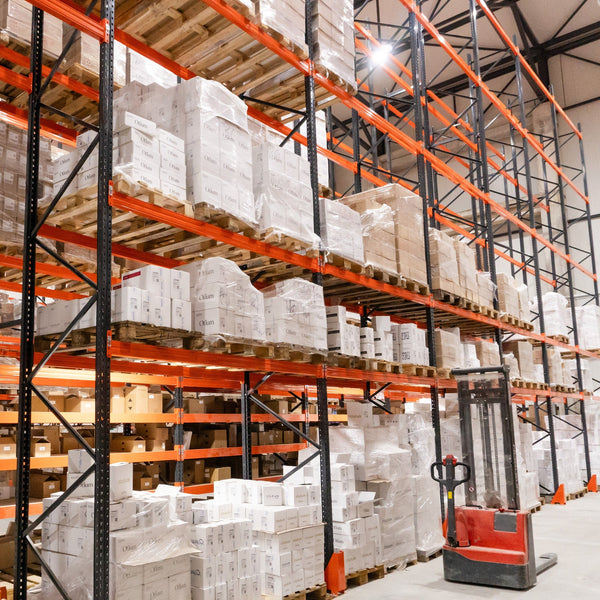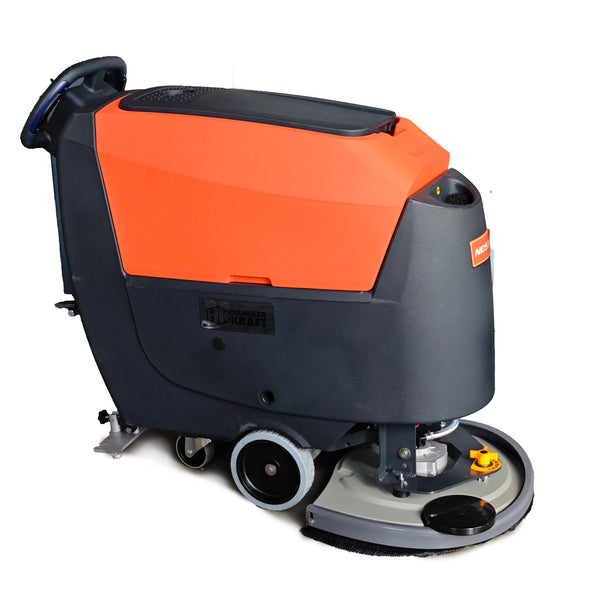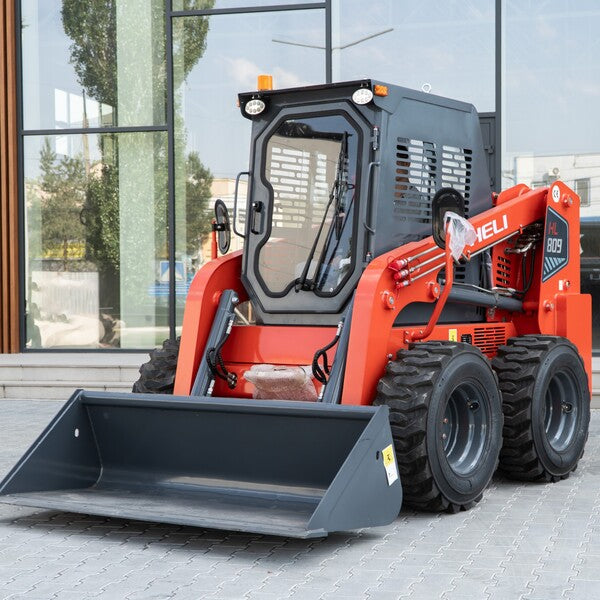


Why does the choice between electric and diesel matter?
Choosing the wrong forklift not only reduces productivity but can also generate additional costs of €15,000–€30,000 over the equipment's lifespan. The fuel type directly influences operating costs, employee safety, noise levels, and even compliance with environmental regulations in force in 2026.
In this guide, we analyze both options impartially, with real figures from the Moldovan and Romanian markets, to help you make the right decision for your warehouse.
Electric forklift: who is it suitable for?
Electric forklifts run on batteries — either traditional lead-acid or lithium-ion (Li-ion) in modern models. They are quiet, emission-free, and ideal for enclosed spaces.
Main advantages:
- Zero emissions — mandatory for food, pharmaceutical warehouses, or spaces with limited ventilation
- Low noise level — under 70 dB, compared to 85–95 dB for diesel
- Lower operating cost — electricity costs 3–4x less than diesel
- Simplified maintenance — no oil filter, timing belt, or exhaust system
- More precise movement control — ideal for high shelves or narrow spaces
Limitations to consider:
- Limited autonomy — 6–8 hours per full charge (lead-acid battery); Li-ion partially solves this problem
- Charging time — 8 hours for lead-acid, 1–2 hours for Li-ion
- Reduced performance in extreme cold — batteries lose efficiency below -10°C
- Higher initial cost — especially for Li-ion versions
If you operate in two shifts, choose a Li-ion battery with fast charging during breaks. The additional cost compared to lead-acid is recouped in 18–24 months through energy savings and zero time lost for battery changes.
Diesel forklift: power for outdoor and heavy-duty applications
Diesel forklifts remain the standard for heavy-duty outdoor operations — construction sites, logistics platforms, ports, and uncovered warehouses. The internal combustion engine offers high torque and unlimited autonomy (refueling in 5 minutes).
Where diesel excels:
- Non-stop operations in multiple shifts without charging breaks
- Uneven surfaces, steep ramps, or rough terrain
- Extreme temperatures — operates optimally from -25°C to +50°C
- High lifting capacities — models from 3.5T up to 16T available
- Lower initial purchase cost compared to its electric Li-ion equivalent
Real disadvantages in 2026:
- Prohibited or restricted in enclosed spaces without industrial ventilation
- Higher maintenance costs — service every 250–500 operating hours
- Increasing environmental taxes — European legislation tightens emission standards
- High noise — can affect working conditions and relations with neighbors
Direct comparison: electric vs diesel
| Criterion | Electric (Li-ion) | Diesel |
|---|---|---|
| Purchase cost (2–3T) | €22,000 – €38,000 | €14,000 – €26,000 |
| Energy cost / hour | €0.40 – €0.70 | €1.80 – €2.40 |
| Annual maintenance | €600 – €1,200 | €1,800 – €3,500 |
| CO₂ emissions | Zero (operation) | High |
| Noise | Silent (<70 dB) | High (85–95 dB) |
| Autonomy / shift | 6–8h (lead) / unlimited (Li-ion) | Unlimited |
| Indoor without ventilation | YES | NO |
| Outdoor / rough terrain | Limited | YES |
| Investment recovery | 3–5 years | 2–3 years (purchase) |
How to choose: key questions to ask yourself
Before making any decision, answer these 5 questions:
- Where do you operate 80% of the time? Enclosed indoor → electric mandatory. Outdoor or mixed → diesel or LPG.
- How many shifts per day? Single shift → standard electric. Two shifts+ → electric Li-ion or diesel.
- What lifting capacity do you need? Under 3.5T → both options available. Over 3.5T → diesel dominates the offer.
- What is the total operating budget for 5 years? Don't just look at the purchase price — calculate energy + service + parts.
- Do you have adequate electrical infrastructure? Industrial chargers require 380V three-phase current and a dedicated charging point.
Conclusion: there is no universal winner
Both electric and diesel forklifts have their well-defined place in 2026. Electric clearly wins for indoor operations, sensitive environments, and companies focused on reducing long-term operating costs. Diesel remains indispensable for outdoor, rough terrain, and high lifting capacity operations.
The most frequent advice we give our customers: don't buy based on the sticker price. Calculate the total cost over 5 years — often electric is cheaper even if it seems more expensive at first glance.
The HandlerKraft team can analyze your operations and recommend the right equipment — free of charge and obligation. Contact us at +373 22 788 907 or visit our showroom in Chisinau.